Slash Your Factory's Energy Bills: How Commercial Solar & Storage Drives Immediate Operational Savings
•
Slash Your Factory's Energy Bills: How Commercial Solar & Storage Drives Immediate Operational Savings
Problem: Factory energy costs crushing your bottom line? Agitation: Peak demand charges and grid instability threaten operations daily. Solution: Solar-plus-storage delivers instant savings.
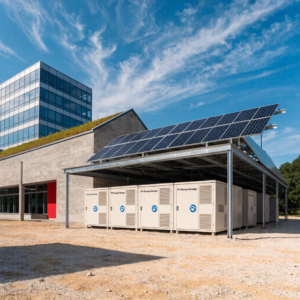
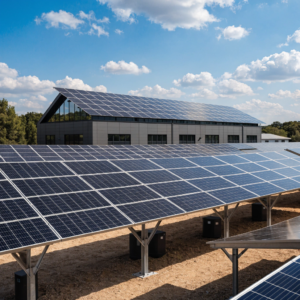
Commercial solar and battery storage systems[^1] reduce factory energy costs by 30-70% through peak shaving[^2], load shifting, and grid independence, providing immediate operational savings and enhanced competitiveness.
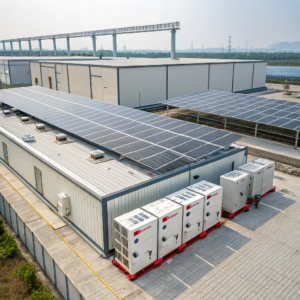
The manufacturing landscape has shifted dramatically in recent years, and energy costs have become one of the most significant operational expenses for factories worldwide. What once seemed like a futuristic concept—powering industrial operations with solar energy and intelligent storage systems—has become not just viable, but essential for maintaining competitive advantage in today's market.
Power Through Peaks & Blackouts: How Do Solar Storage Solutions Optimize Factory Operations?
Peak demand charges can devastate factory budgets. Blackouts halt production entirely. Smart energy systems eliminate both risks through intelligent power management[^3].
Solar-plus-storage systems automatically shift energy usage during peak hours, store excess solar power, and provide uninterrupted backup power during outages, ensuring continuous factory operations.
Understanding Peak Demand Management
Think of peak demand charges like surge pricing for electricity—except they can account for 30-50% of your monthly energy bill. I've witnessed factories pay astronomical fees simply because their equipment ramped up during high-demand periods. Solar storage systems act like a financial buffer, automatically drawing from stored battery power when grid prices spike.
The beauty lies in the automation. These systems monitor real-time electricity rates and seamlessly switch between solar generation, battery discharge, and grid power to minimize costs. It's like having a financial advisor for your energy consumption, working 24/7 to optimize every kilowatt-hour.
| Energy Source | Peak Hours Cost | Off-Peak Cost | Storage Benefit |
|---|---|---|---|
| Grid Power | $0.25-0.40/kWh | $0.08-0.12/kWh | Avoid peak rates |
| Solar Direct | $0.02-0.04/kWh | $0.02-0.04/kWh | Consistent low cost |
| Battery Storage | $0.06-0.10/kWh | N/A | Peak shaving capability |
Blackout Protection and Operational Continuity
Manufacturing downtime costs average $50,000 per hour across industries. During my years consulting with factories, I've seen single power outages cost companies hundreds of thousands in lost production, spoiled materials, and restart expenses. Battery backup systems eliminate this vulnerability entirely.
Modern solar storage systems provide seamless transition during outages—your critical equipment continues running without missing a beat. The system instantly isolates from the grid and powers essential operations, maintaining production schedules and protecting sensitive equipment from power fluctuations.
Enhance Competitiveness: How Does Green Energy Lower Production Costs & Boost Market Appeal?
Rising energy costs squeeze profit margins while customers increasingly demand sustainable products. The solution combines immediate cost savings with enhanced market positioning.
Green energy systems reduce production costs by 25-40% while meeting sustainability requirements for major contracts, improving both profitability and market competitiveness.
Direct Cost Reduction Impact
The numbers speak for themselves. Solar installations typically pay for themselves within 3-5 years, then provide decades of virtually free electricity. I've worked with factories that cut their energy expenses by 60-70% after implementing comprehensive solar-plus-storage systems.
Consider a mid-size manufacturing facility spending $50,000 monthly on electricity. A properly sized solar system could reduce this to $15,000-20,000, saving $300,000-420,000 annually. Over the 25-year system lifespan, we're talking about millions in accumulated savings that flow directly to the bottom line.
Market Advantage Through Sustainability
Major corporations now require sustainability certifications from their suppliers. Companies like Apple, Google, and Amazon mandate that suppliers demonstrate renewable energy usage. I've seen manufacturers lose lucrative contracts simply because they couldn't meet green energy requirements.
Solar installations provide immediate credibility in sustainability reporting. You can quantify carbon reduction, showcase renewable energy percentages, and meet increasingly strict environmental standards. This isn't just about feeling good—it's about qualifying for the most profitable contracts in today's market.
Smart Energy Management for Factories: How Does AI-Powered Solar & Storage Optimize Your Energy Portfolio?
Traditional energy management relies on guesswork and manual adjustments. Smart systems use artificial intelligence to predict, adapt, and optimize energy usage in real-time.
AI-powered energy management systems[^4] analyze production schedules, weather patterns, and electricity rates to automatically optimize solar generation, battery charging, and grid usage for maximum savings.
Predictive Energy Optimization
Modern energy management systems don't just react—they predict. By analyzing weather forecasts, production schedules, and historical energy usage patterns, AI algorithms determine optimal charging and discharge cycles for maximum savings.
The system might charge batteries during low-cost overnight hours, discharge during peak morning rates, then switch to direct solar power during midday production peaks. This level of optimization would be impossible to manage manually, yet it happens automatically every day.
Integration with Manufacturing Operations
Smart energy systems integrate directly with manufacturing execution systems (MES) and enterprise resource planning (ERP) software. When production schedules shift, energy systems adapt immediately. Planning a high-energy process during typically expensive peak hours? The system automatically pre-charges batteries to offset grid usage.
| Optimization Feature | Benefit | Savings Impact |
|---|---|---|
| Production Schedule Integration | Align energy usage with manufacturing needs | 15-25% additional savings |
| Weather Prediction | Optimize solar/battery balance | 10-20% efficiency gain |
| Real-time Rate Monitoring | Automatic source switching | 20-35% cost reduction |
| Predictive Maintenance | Prevent system downtime | 5-10% performance improvement |
Data-Driven Decision Making
The insights generated by smart energy systems transform how factories approach energy management. Real-time dashboards show exactly where energy dollars go, identify inefficient equipment, and highlight optimization opportunities.
I've helped factories discover that specific production lines were consuming 40% more energy than necessary, or that HVAC systems were running during non-production hours. These insights, powered by comprehensive energy monitoring, enable targeted improvements that compound savings over time.
The combination of immediate cost reduction, operational resilience, and market positioning makes commercial solar-plus-storage[^5] not just an energy solution, but a comprehensive business strategy for manufacturing success.
Conclusion
Solar-plus-storage systems deliver immediate operational savings, enhanced reliability, and competitive advantages, making them essential investments for modern factory operations seeking sustainable profitability.
[^1]: Explore how these systems can drastically reduce energy costs and enhance factory operations.
[^2]: Learn about peak shaving techniques that can help lower your energy bills significantly.
[^3]: Find out how intelligent power management can enhance operational efficiency and reduce costs.
[^4]: Discover how AI can optimize energy usage and lead to significant cost savings.
[^5]: Explore the comprehensive benefits of integrating solar and storage solutions for factories.