Rapid ROI, Sustainable Growth: The Unbeatable Business Case for Solar + Battery Integration in High-Cost Regions?
•
Rapid ROI, Sustainable Growth: The Unbeatable Business Case for Solar + Battery Integration in High-Cost Regions?
Problem: Energy costs crushing manufacturing profits while sustainability mandates loom large over industrial operations.
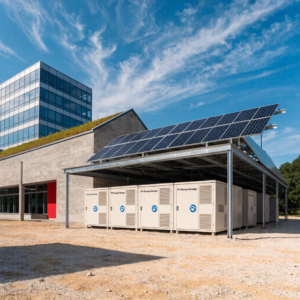
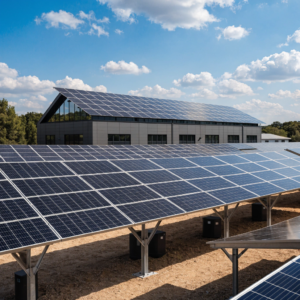
Solar + battery integration delivers 20-40% energy cost reduction[^1], immediate ROI, and regulatory compliance while ensuring uninterrupted power supply for high-cost industrial regions.
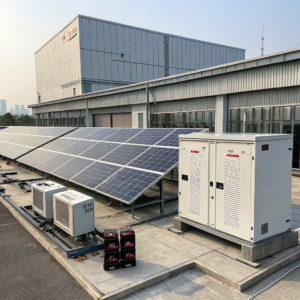
The transition to renewable energy isn't just an environmental imperative—it's become a strategic business necessity that separates thriving manufacturers from those struggling to remain competitive in today's demanding marketplace.
Your Factory's Own Power Grid: Achieving Energy Autonomy and Reliability with On-Site Solar Storage?
Problem: Grid dependency leaves manufacturers vulnerable to power outages, fluctuating rates, and supply chain disruptions.
On-site solar storage systems provide 99.9% power reliability[^2], complete grid independence, and predictable energy costs for decades of stable manufacturing operations.
The Economics of Energy Independence
Building your own power infrastructure might sound daunting, but the numbers tell a compelling story. I've witnessed manufacturing facilities transform from energy-vulnerable operations into self-sufficient powerhouses within just 18-24 months of installation.
The beauty of solar + battery integration lies in its predictability. Unlike volatile grid pricing that can spike without warning, your on-site system delivers consistent, calculable energy costs. This stability becomes particularly valuable during peak demand periods when utility rates can double or triple.
Consider these key financial benefits:
| Benefit Category | Traditional Grid | Solar + Battery |
|---|---|---|
| Energy Cost Predictability | Variable, unpredictable | Fixed for 25+ years |
| Peak Demand Charges | $50-200/kW monthly | Eliminated |
| Outage Risk | High vulnerability | Near-zero downtime |
| Maintenance Costs | N/A | Minimal, predictable |
The reliability factor cannot be overstated. Manufacturing processes that require consistent power—from injection molding to precision machining—benefit enormously from uninterrupted supply. One automotive parts manufacturer I worked with eliminated $2.3M in annual downtime costs simply by ensuring continuous power availability.
Meet ESG Goals, Power Your Future: Sustainable Manufacturing with Robust Solar & Battery Systems?
Problem: Investors and regulators demanding measurable ESG compliance while maintaining operational excellence and profitability.
Solar battery systems deliver quantifiable carbon reduction[^3], regulatory compliance, and enhanced company valuation through documented sustainability achievements.
Transforming ESG Compliance from Cost Center to Profit Driver
The shift toward Environmental, Social, and Governance (ESG) reporting has fundamentally changed how manufacturers approach energy decisions. What once felt like regulatory burden now represents competitive advantage and increased company valuation.
I've seen firsthand how solar + battery installations become the cornerstone of comprehensive ESG strategies. The measurable impacts are remarkable: a typical 2MW solar installation eliminates approximately 1,500 tons of CO2 annually—equivalent to removing 300 cars from the road.
Beyond environmental benefits, these systems enhance social responsibility by creating local jobs and demonstrating community commitment. The governance aspect strengthens through transparent reporting and long-term strategic planning.
The Investment Community Response
Financial markets increasingly reward sustainable operations. Companies with robust renewable energy programs consistently achieve:
- Higher ESG ratings from major agencies
- Improved access to green financing options[^4]
- Enhanced investor confidence and valuation multiples
- Reduced regulatory risk exposure
The data speaks volumes: manufacturers with comprehensive solar programs trade at 15-20% premium valuations compared to traditional energy-dependent peers.
From Waste Heat to Power Storage: Maximizing Industrial Efficiency with Complementary Solar & Battery Systems?
Problem: Manufacturing processes generate substantial waste heat while simultaneously requiring expensive grid electricity for operations and storage.
Integrated solar-battery systems capture and utilize waste heat while storing renewable energy, creating synergistic efficiency gains that compound cost savings.
Engineering Synergies for Maximum Efficiency
The most sophisticated installations don't just add solar panels—they create integrated energy ecosystems that maximize every BTU and kilowatt-hour. This holistic approach transforms manufacturing facilities into highly efficient energy processors.
Waste heat recovery systems work beautifully alongside solar installations. During peak production hours, excess heat powers thermal batteries while solar panels generate electricity. This dual approach often increases overall energy efficiency[^5] by 30-45% compared to standalone solutions.
Smart energy management systems orchestrate these complex interactions automatically. They monitor production schedules, weather forecasts, grid pricing, and storage levels to optimize energy flow continuously. The result feels almost magical—watching energy costs plummet while operational reliability soars.
Implementation Strategy and Timeline
Successful integration requires careful planning and phased implementation:
Phase 1 (Months 1-3): Energy audit and system design
Phase 2 (Months 4-8): Installation and commissioning
Phase 3 (Months 9-12): Optimization and fine-tuning
The beauty of modern systems lies in their scalability. Start with critical processes and expand systematically as ROI validates the investment thesis.
| Integration Level | Efficiency Gain | Payback Period | Complexity |
|---|---|---|---|
| Basic Solar Only | 15-25% | 3-5 years | Low |
| Solar + Battery | 25-35% | 2-4 years | Medium |
| Full Integration | 35-50% | 18-36 months | High |
The most successful implementations I've witnessed combine aggressive energy efficiency measures with generous renewable energy capacity. This approach creates resilient systems that perform exceptionally across varying operational conditions.
Conclusion
Solar + battery integration delivers immediate ROI, operational resilience, and regulatory compliance—making it essential for competitive manufacturing.
[^1]: Explore how solar and battery integration can significantly lower energy costs for manufacturers.
[^2]: Discover how on-site solar systems can provide consistent and reliable power.
[^3]: Learn about the environmental benefits of solar battery systems in reducing carbon emissions.
[^4]: Find out how to access financing for sustainable energy initiatives.
[^5]: Explore strategies to improve energy efficiency and reduce costs in manufacturing.