One Box, Zero Headaches: How a Plug-and-Play Solar Container Simplifies Complex Off-Grid Setups?
•
One Box, Zero Headaches: How a Plug-and-Play Solar Container Simplifies Complex Off-Grid Setups?
Problem: Off-grid installations often face complex logistics, extended deployment times, and high setup costs that drain resources before power flows.
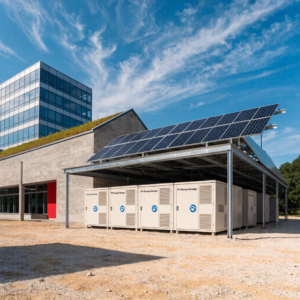
A plug-and-play solar container[^1] simplifies off-grid setups[^2] by integrating all components in one pre-configured unit, eliminating complex installations and reducing deployment time from weeks to hours.
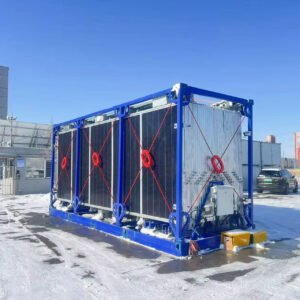
When I first encountered remote power challenges, I realized traditional solar installations felt like assembling a thousand-piece puzzle in the dark. But containerized solutions changed everything—suddenly, what once took engineering teams weeks could happen in a single afternoon.
From Shipping to Shining: The Incredible Speed of Deploying a Full-Scale Solar Power Plant?
Problem: Traditional solar installations require months of planning, complex logistics, and extensive on-site assembly that delays critical power needs.
Containerized solar plants deploy in 24-48 hours versus months for traditional systems, featuring pre-wired components, integrated inverters[^3], and plug-and-play connectivity for immediate power generation.
The Speed Revolution in Solar Deployment
Remember waiting months for solar installations? Those days are behind us. Modern solar containers arrive fully assembled, pre-tested, and ready to generate power the moment they're connected. I've witnessed remote mining operations go from zero to full power in under two days—something that would have taken traditional installations 3-6 months to achieve.
The secret lies in factory-controlled assembly where every component is integrated, tested, and optimized before shipping. Weather delays, missing parts, and coordination nightmares become obsolete when your entire power plant fits in a shipping container.
| Deployment Method | Setup Time | Complexity Level |
|---|---|---|
| Traditional Solar | 3-6 months | High |
| Solar Container | 24-48 hours | Low |
| Hybrid Systems | 2-4 weeks | Medium |
Cut the Wires, Keep the Lights On: The Cost-Saving Independence of Containerized Solar for Remote Sites?
Problem: Remote locations face astronomical grid connection costs[^4] and ongoing utility dependence that drains operational budgets indefinitely.
Containerized solar eliminates grid connection costs averaging $50,000+ per mile while providing energy independence[^5], predictable operating expenses, and zero monthly utility bills for remote operations.
Breaking Free from Grid Dependency
Grid extension costs can exceed $100,000 per mile in remote areas—money that containerized solar puts back in your pocket. I've calculated savings exceeding $300,000 over five years for typical remote operations when comparing grid connection versus solar containers. The math is compelling: immediate deployment, fixed energy costs, and complete independence from utility rate increases.
Beyond cost savings, energy security becomes paramount. Grid outages don't affect containerized systems, ensuring continuous operations for critical applications like telecommunications, medical facilities, or industrial processes where downtime costs thousands per hour.
Operational Excellence Through Simplification
Maintenance becomes straightforward with containerized systems. Instead of scattered components across acres, everything critical sits within one weatherproof enclosure. Remote monitoring capabilities mean issues get detected and resolved before they impact operations—something traditional distributed systems struggle to achieve.
| Cost Factor | Grid Extension | Solar Container |
|---|---|---|
| Initial Investment | $50K-100K+ per mile | Fixed container cost |
| Monthly Bills | $500-5000+ | $0 |
| Maintenance | Utility dependent | Predictable |
Fixed vs. Flexible: Why a 20ft Foldable Solar Container Outperforms Traditional PV in Dynamic Settings?
Problem: Traditional solar installations create permanent infrastructure unsuitable for temporary projects, seasonal operations, or evolving site requirements that demand adaptability.
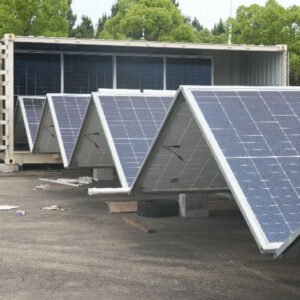
Foldable solar containers provide 40kW+ capacity with complete portability, allowing rapid redeployment between sites while maintaining installation simplicity and full functionality compared to fixed systems.
Mobility Meets Power Generation
The breakthrough moment came when I realized solar power didn't need permanent foundations. Foldable containers deploy their panels automatically, creating substantial power capacity from a standard shipping container footprint. When projects end or sites change, the entire system packs up and moves—try doing that with traditional ground-mount installations.
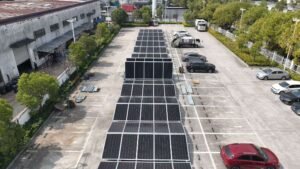
Construction companies, disaster response teams, and seasonal operations benefit enormously from this flexibility. Instead of abandoning installed systems or facing reinstallation costs, they simply relocate their power source. The container's integrated design means no component gets left behind or requires separate transportation.
Performance Without Compromise
Skeptics question whether portability sacrifices performance, but modern foldable containers generate equivalent power to traditional installations while adding deployment flexibility. Integrated tracking systems, weather monitoring, and automatic panel positioning[^6] optimize energy capture regardless of location. The result: maximum power generation with unprecedented adaptability.
| System Type | Power Output | Deployment Time | Relocatable |
|---|---|---|---|
| Traditional Fixed | High | Weeks-Months | No |
| Foldable Container | High | Hours | Yes |
| Portable Panels | Low-Medium | Days | Partially |
Conclusion
Containerized solar transforms complex off-grid challenges into simple plug-and-play solutions, delivering faster deployment, cost savings, and unprecedented flexibility for modern energy needs.
[^1]: Explore how plug-and-play solar containers can revolutionize off-grid power solutions with ease and efficiency.
[^2]: Learn about the intricacies of off-grid setups and how they can provide energy independence.
[^3]: Understand the importance of integrated inverters in optimizing solar energy generation.
[^4]: Understand the financial implications of grid connections versus solar solutions.
[^5]: Explore how solar energy can free you from utility dependence and rising costs.
[^6]: Explore how automatic panel positioning maximizes energy capture in solar installations.