Certify Your Green: Leveraging Solar Power for Premium Organic & Sustainable Hydroponic Product Labeling
•
Certify Your Green: Leveraging Solar Power for Premium Organic & Sustainable Hydroponic Product Labeling
Premium organic labels demand sustainable practices, yet energy-intensive hydroponic operations struggle with green certification requirements.
Solar power enables hydroponic farms to achieve premium organic and sustainable certifications by providing clean energy for production, meeting strict labeling requirements while reducing operational costs and environmental impact.
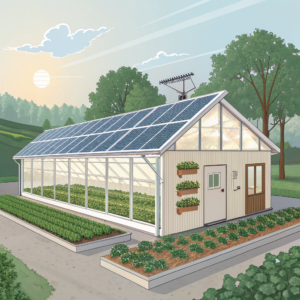
The journey from traditional energy-dependent hydroponics to certified sustainable farming represents more than just switching power sources—it's about unlocking premium market positioning that consumers increasingly demand. Understanding how solar integration transforms your certification potential could be the difference between standard pricing and premium profits.
Energy Security for Every Leaf: Protecting Your Hydroponic Crop from Power Fluctuations with Solar?
Power outages devastate hydroponic crops, yet grid dependency leaves farmers vulnerable to catastrophic losses.
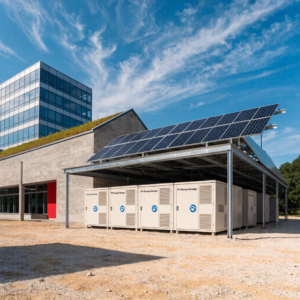
Solar power systems with battery storage provide reliable backup energy for hydroponic operations, protecting crops from power fluctuations and ensuring continuous operation of critical systems like pumps, lighting, and climate control.
Power security in hydroponics isn't just about keeping lights on—it's about protecting your entire investment from grid instabilities. When I first encountered a farm that lost $50,000 worth of crops during a three-day blackout, I realized the critical importance of energy independence. Solar systems with integrated battery storage create multiple layers of protection: primary solar generation during daylight, battery backup for nighttime operations, and grid-tie capability for extreme weather events. Modern lithium battery systems can maintain critical operations for 48-72 hours, while automated load management prioritizes essential systems like circulation pumps and environmental controls. The beauty lies in the scalability—you can start with basic backup for pumps and gradually expand to full facility independence.
| System Component | Backup Duration | Critical Functions Protected |
|---|---|---|
| Battery Storage | 24-48 hours | Pumps, sensors, controls |
| Grid-Tie Backup | Unlimited | Full facility operations |
| Load Management | Variable | Priority-based protection |
Optimizing Grow Lights: Pairing Solar Power with LED Spectra for Enhanced Hydroponic Plant Growth?
Energy costs crush profitability while plants demand specific light spectra for optimal growth and premium quality.
Solar-powered LED systems optimize both energy costs and plant growth by matching renewable energy generation with precise spectral requirements, enabling farmers to achieve premium quality while maintaining sustainable operations.
The synergy between solar power and LED grow lights revolutionizes hydroponic economics and plant quality. Through careful analysis of solar generation patterns and plant photoperiods, smart farmers can align energy-intensive growth phases with peak solar production. Advanced LED controllers now integrate with solar monitoring systems to automatically adjust light intensity and spectrum based on available renewable energy. During peak solar hours, systems can deliver full-spectrum, high-intensity lighting for maximum photosynthesis, while transitioning to energy-efficient maintenance lighting during low-generation periods. This approach not only reduces energy costs by 60-80% but actually improves plant quality—studies show that solar-synchronized lighting cycles mimic natural conditions, resulting in higher nutrient density and better flavor profiles that command premium prices.
| Solar Integration Level | Energy Savings | Quality Improvement | Premium Market Access |
|---|---|---|---|
| Basic Grid-Tie | 40-60% | Moderate | Standard organic |
| Smart Controllers | 60-80% | Significant | Premium sustainable |
| Full Automation | 70-90% | Maximum | Ultra-premium green |
From Data to Dollars: Using Solar Analytics to Fine-Tune Your Hydroponic Energy Consumption?
Hidden energy inefficiencies drain profits while valuable production data remains untapped for optimization opportunities.
Solar monitoring systems provide detailed energy consumption analytics that reveal optimization opportunities, helping hydroponic operations reduce costs, improve yields, and demonstrate sustainability metrics for premium certification programs.
Solar analytics transform hydroponic operations from energy consumers into efficiency masters. Modern solar monitoring systems capture granular data on energy production, consumption patterns, and system performance that reveals hidden optimization opportunities. I've seen farms discover that their nutrient pumps were cycling inefficiently during peak solar hours, missing opportunities for free energy utilization. Advanced analytics platforms now integrate weather forecasting, plant growth models, and energy markets to create predictive optimization strategies. These systems can automatically shift energy-intensive operations like water heating, CO2 generation, and deep cleaning cycles to coincide with peak solar production. The data also provides compelling evidence for sustainability certifications—detailed reports showing renewable energy percentages, carbon footprint reductions, and efficiency improvements that premium buyers increasingly demand. The most sophisticated operations use this data to create "energy signatures" that optimize plant quality while minimizing costs.
| Analytics Application | Cost Reduction | Certification Value | Market Premium |
|---|---|---|---|
| Basic Monitoring | 10-20% | Standard reporting | 5-10% |
| Predictive Optimization | 25-40% | Detailed metrics | 15-25% |
| AI-Driven Management | 40-60% | Real-time verification | 25-40% |
Conclusion:
Solar integration transforms hydroponic operations into certified sustainable farms, delivering energy security, optimized growth conditions, and premium market positioning.