Beyond Grid Parity: Why Factory Solar is Now the Cheapest Form of Electricity for Many Industries?
•
Beyond Grid Parity: Why Factory Solar is Now the Cheapest Form of Electricity for Many Industries?
Problem: Rising energy costs crush manufacturing profits. Agitate: Traditional grid power threatens competitiveness. Solution: Factory solar delivers unbeatable electricity rates.
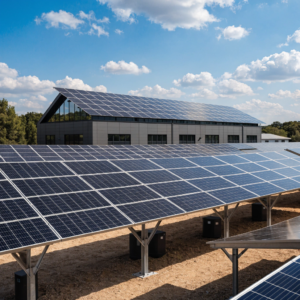
Factory solar has achieved grid parity and beyond, now offering electricity at 3-5 cents per kWh compared to industrial grid rates of 8-15 cents, making it the cheapest power source for most manufacturing operations.

The energy landscape has fundamentally shifted, and smart manufacturers are capitalizing on this transformation. What once seemed like a futuristic concept has become today's economic reality—solar power isn't just competitive anymore, it's dominating the cost equation for industrial electricity.
How Does Battery Storage Ensure Uninterrupted Factory Production?
Ever worried about power outages grinding your production line to a costly halt?
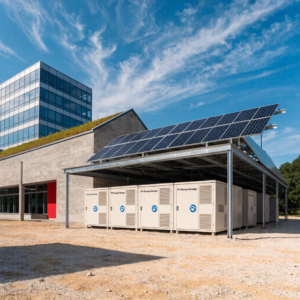
Battery storage paired with solar guarantees 24/7 factory operations by storing excess daytime solar generation for nighttime use and providing instant backup during grid failures.
Modern manufacturing demands absolute power reliability, and traditional grid dependency leaves operations vulnerable to outages, voltage fluctuations, and demand charges that can devastate profit margins. I've witnessed factories lose hundreds of thousands in a single outage.
Battery storage transforms this vulnerability into competitive advantage. Industrial lithium-ion systems now deliver 10-15 year lifespans with 90%+ efficiency rates. During peak solar generation, excess power charges massive battery banks that seamlessly supply operations during evening shifts or grid disturbances.
The economics are compelling: demand charge reductions alone often justify battery investments. Peak shaving capabilities can cut electricity bills by 20-40% beyond solar savings. Modern systems integrate predictive analytics, learning your production patterns to optimize energy dispatch.
| Storage Benefit | Impact on Operations |
|---|---|
| Backup Power | Zero downtime during outages |
| Peak Shaving | 20-40% demand charge reduction |
| Load Balancing | Consistent power quality |
| Grid Independence | Protection from utility rate hikes |
Smart manufacturers are discovering that battery storage doesn't just complement solar—it multiplies the financial returns while guaranteeing the operational reliability that modern production demands.
How Does Solar Power Attract Green Investment and Meet ESG Goals?
Wondering why investors are flocking to solar-powered manufacturers while others struggle for capital?
Corporate solar installations demonstrate measurable ESG commitment, attracting green investors and ESG-focused funds while meeting sustainability targets that modern stakeholders demand from industrial partners.
The investment landscape has evolved dramatically—ESG criteria now influence over $30 trillion in global assets under management. Manufacturing companies with robust sustainability profiles consistently command higher valuations and easier access to capital.
Solar installations provide quantifiable ESG metrics that investors love: documented carbon footprint reduction, renewable energy percentage, and long-term emission reduction commitments. I've seen manufacturers secure favorable financing terms specifically because their solar projects demonstrated serious environmental commitment.
Green bonds, sustainability-linked loans, and ESG-focused investment funds actively seek companies with measurable renewable energy adoption. Solar projects create the documented environmental impact that satisfies institutional investor requirements while generating immediate operational savings.
| ESG Benefit | Investor Impact |
|---|---|
| Carbon Reduction | Measurable emission cuts |
| Renewable % | Clear sustainability metrics |
| Future-Proofing | Climate risk mitigation |
| Stakeholder Appeal | Enhanced corporate reputation |
Beyond investor attraction, solar installations help manufacturers win contracts with sustainability-conscious customers, comply with emerging environmental regulations, and attract top talent who increasingly prioritize working for environmentally responsible employers.
The convergence of financial returns and environmental responsibility makes factory solar a strategic imperative, not just an operational upgrade.
How Do You Quantify the True ROI of Industrial Solar Installation?
Tired of energy costs eating into your bottom line while competitors gain unfair advantages?
Industrial solar delivers 15-25% annual returns through electricity savings, tax incentives, depreciation benefits, and avoided future rate increases, with payback periods of 3-5 years.
Calculating solar ROI requires looking beyond simple electricity bill reductions—though those alone often justify the investment. Modern industrial installations typically generate electricity at 3-5 cents per kWh compared to grid rates of 8-15 cents, creating immediate operational savings.
Tax incentives amplify returns significantly: the federal Investment Tax Credit (ITC) provides 30% of system cost as direct tax credit, while accelerated depreciation (MACRS) allows 100% first-year deduction. State and local incentives often add another 10-20% in benefits.
But the real ROI magic happens in long-term protection against rising electricity rates. Grid electricity costs increase 2-4% annually, while solar production costs remain fixed for 25+ years. This rate escalation protection often represents the largest financial benefit.
| ROI Component | Typical Impact |
|---|---|
| Electricity Savings | 50-70% bill reduction |
| Tax Credits | 30% system cost offset |
| Depreciation | 100% first-year deduction |
| Rate Protection | Immunity to utility increases |
| Property Value | 15-20% facility value increase |
Hidden benefits include improved power quality, reduced demand charges through smart inverter technology, and potential revenue from selling excess power back to utilities. Manufacturing facilities with consistent daytime operations often achieve the highest returns, with some installations paying for themselves in under four years.
The financial case for industrial solar has never been stronger, combining immediate tax benefits with decades of protected electricity costs.
Conclusion
Factory solar has transcended environmental virtue signaling to become the smartest financial decision for energy-intensive manufacturers seeking competitive advantages.